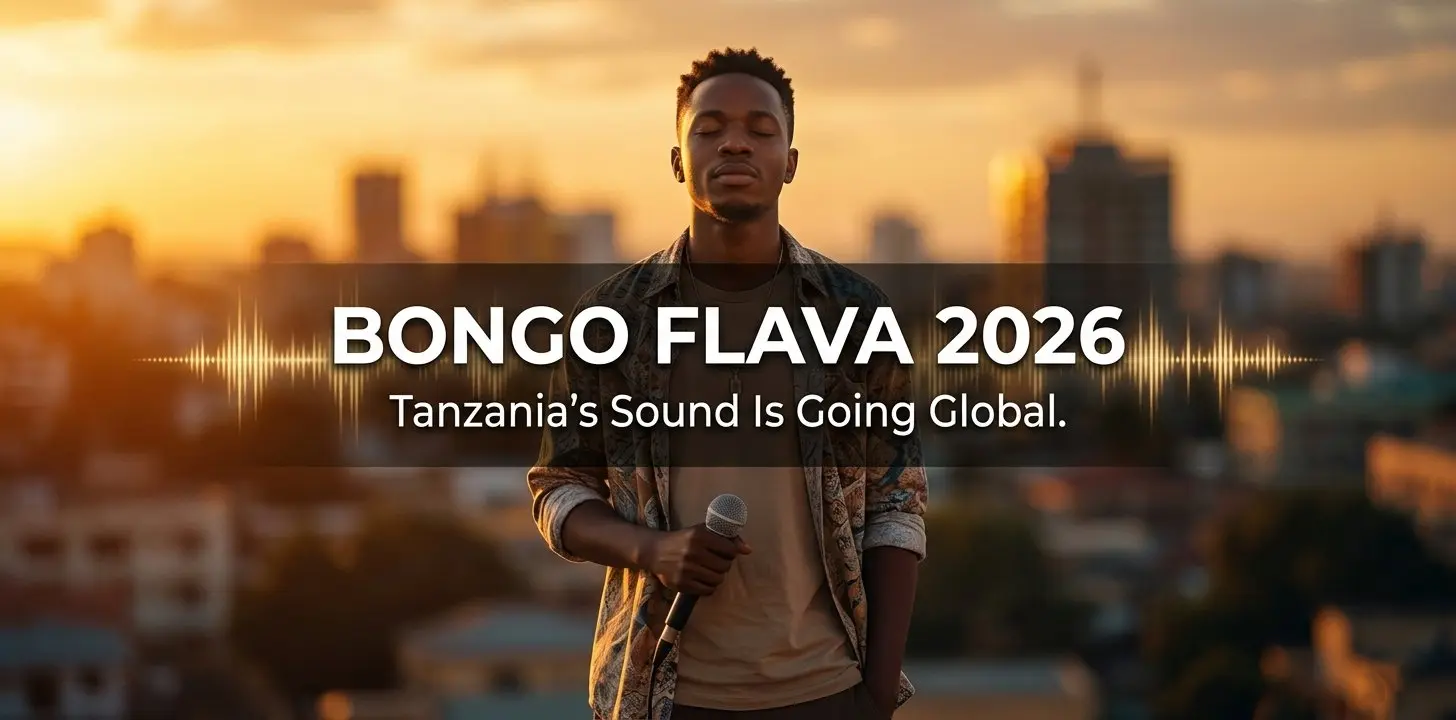
Dangerous in the best possible way.
Marioo dropped "Sugar" and East Africa did not just listen, it felt it. Kusah and Harmonize linked up for "Kama Sio" and the video landed like a cross-border announcement. Diamond Platnumz and Jux released "Joy" and reminded everyone why, when two Tanzanian heavyweights share a beat, the rest of the continent stops scrolling and pays attention.
Tanzania's music scene is rich, diverse, and globally recognized, with Bongo Flava leading the way as one of Africa's most distinctive sounds. KBC
That sentence has been true for a decade. What changed in 2026 is that the world outside East Africa finally caught up to what Dar es Salaam already knew.
What Bongo Flava Actually Is (And Why the Definition Matters for Your Music)
Most people who search for Bongo Flava beats have a feeling they are chasing. They heard Marioo. They heard Alikiba. They heard something in the groove that felt different from Afrobeats, different from Amapiano, rooted in something older and simultaneously completely current.
That feeling has a history.
Bongo Flava is a large divergent evolution of muziki wa kizazi kipya, meaning "music of the new generations," originating in the middle-class youth of Kinondoni District in Dar es Salaam between the mid-1980s and 1990s. IFPI
Fusing western modes of R&B and hip-hop with dancehall, Afrobeats, and traditional Taarab and Dansi sounds, Bongo Flava is an upbeat, socially aware vehicle of expression for a young and fearless generation. Showcase Africa
That fusion is precisely why it translates everywhere. It is not trying to be American. It is not trying to be Nigerian. It is entirely itself, built from Swahili identity, from Dar es Salaam street culture, from the specific rhythm of a city that earned its nickname through intelligence and survival.
When you record over a Bongo Flava beat, you are stepping into that lineage. The groove carries it whether you know the history or not.
The Records That Define the Sound Right Now
Understanding what Bongo Flava sounds like in 2026 is not an academic exercise. It is essential information for any artist who wants to make something that connects with the East African ear immediately.
Marioo's "Sugar," Diamond Platnumz and Jux's "Joy," Kusah and Harmonize's "Kama Sio," and Jay Melody's "GAGAZIKO" represent the current wave of Bongo Flava releases dominating Tanzanian music in 2026. KBC
Listen to these records back to back and a pattern emerges.
The tempos sit in a range that makes the body respond before the brain processes it. The melodic structures leave space, deliberate breathing room in the instrumental where a vocalist can live rather than fight the beat. The bass sits lower than Afrobeats, warmer, less percussive, more hypnotic. The production is clean but never sterile, it has texture, it has Dar es Salaam in it.
This is not a sound that happened by accident. These are producers who have been refining a specific emotional frequency for thirty years, passing knowledge between generations, and the artists recording over those beats in 2026 are the beneficiaries of all of that accumulated craft.
The Cross-Border Moment Nobody Is Naming Out Loud
Dulla Makabila teamed up with Kenya's Savara for "Kaka Sokwe" in 2026, a cross-border Afro-pop Bongo Flava collaboration that signals exactly where the genre is heading. KBC
Tanzania and Kenya have always shared musical DNA. Swahili is the connective tissue. The rhythms travel easily across a border that, musically speaking, barely exists.
But what is happening now is more deliberate. Artists are choosing collaborations strategically, not just because they like each other, but because a Tanzanian producer's beat with a Kenyan or Ugandan vocalist doubles the algorithm's reach immediately. Two audiences. Two countries of playlist curators. Two sets of fans who will each feel a sense of ownership over the record.
Bien understood this with "Finale" and Alikiba. Dulla Makabila understood it with Savara. The producers who are building Bongo Flava instrumentals in 2026 are building them wide enough to hold multiple voices from multiple countries, and that architectural decision is what makes the genre a regional export rather than a local product.
The Streaming Reality That Makes Bongo Flava a Career Move Right Now
Here is the information that turns this from a creative conversation into a strategic one.
Sub-Saharan Africa posted recorded music revenue growth of 15.2%, with revenues reaching $120 million in the latest reporting period. DjPisi That number is growing at a rate that outpaces almost every other region on the planet.
Boomplay performs best for broad reach across multiple African markets, especially where mobile-first and free listening are common, making it particularly useful for artists seeing early traction in East Africa who want to maximize reach in data-conscious markets. Shazam
The Bongo Flava playlist ecosystem on Spotify, Apple Music, Boomplay, and Audiomack is already built and already has listeners inside it. The Bongo Flava Music 2026 playlist on Spotify alone has accumulated 24,000 saves OkayAfrica, which means 24,000 people have actively told the algorithm they want more of this sound delivered to them regularly.
Every new Bongo Flava release that gets properly distributed has a built-in discovery pathway that most other genres are still trying to construct.
The audience exists. The infrastructure exists. The only missing piece is your record.
What a Bongo Flava Beat Needs to Actually Be
This is where most artists get misled by low-quality instrumentals labeled "Bongo Flava" that have none of the actual characteristics of the genre.
A proper Bongo Flava instrumental in 2026 carries specific DNA:
The groove sits in a mid-tempo pocket, typically between 85 and 100 BPM, with a swing feel that makes straight-time rapping feel slightly wrong over it. This is intentional. The genre rewards melodic delivery.
The bass is warm, round, and sits underneath the mix rather than cutting through it. If the bass is aggressive and punchy, it is not Bongo Flava, it is something else wearing the label.
The melodic elements, whether guitar, piano, or synth, carry a romanticism that is distinctly East African, influenced by Taarab's emotional directness but translated into contemporary production language.
The space is generous. Bongo Flava production breathes. Overcrowded arrangements are a Western import the genre has always resisted.
When you find a beat that carries all four of these qualities, the vocal almost writes itself. The genre is that specific about what it wants from a performer.
Why Buying a Tanzanian Instrumental Changes What You Can Build
Despite the popularity of Bongo Flava and the large number of well-known artists throughout Tanzania, most artists have historically been unable to make a living selling their music, relying instead on live performances, because copyright enforcement has been weak. IFPI
That era is ending.
Digital distribution, proper licensing, and Content ID systems have created a structure where owning your masters and licensing your beats correctly is no longer optional advice for serious artists. It is the actual mechanism by which money flows to creators.
An artist who records over a properly licensed Bongo Flava instrumental, distributes it cleanly, and owns the rights to their master recording, sits in a completely different financial position from one who recorded the same song over a free beat with no documentation.
The song might sound identical on day one. By year two, when streaming royalties accumulate, when a sync opportunity appears, when a label comes asking, the difference is everything.
Start With the Right Beat
The catalogue at mBeatz is built for exactly this moment in East African music. Bongo Flava instrumentals produced with the DNA of the genre intact, ready for immediate download in full WAV quality, with a proper licence included.
Whether you are in Dar es Salaam trying to sound like the records that raised you, or in Nairobi building the cross-border collaboration that both audiences will claim, or anywhere else on the continent chasing the specific feeling that Marioo and Diamond and Alikiba have been putting into their records for years.
The beat is the beginning. Everything else is built on top of it.
Browse Tanzanian Bongo Flava Instrumentals at mBeatz and find your sound today.
Which 2026 Bongo Flava record has your attention right now? Drop it in the comments.
.jfif)

0 Comments
Leave a Comment