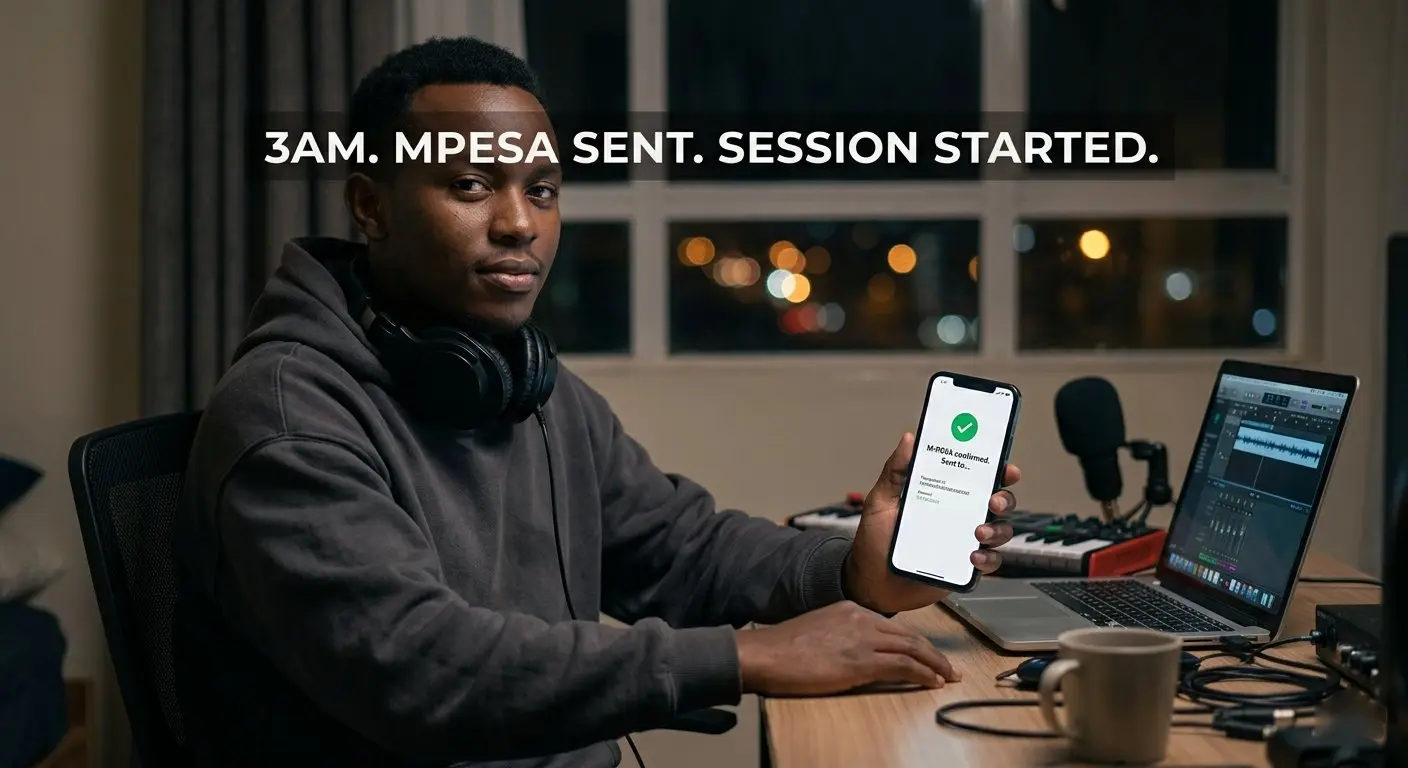
It is 3am in Nairobi.
Westlands is quiet. Matatus stopped running an hour ago. The city that never fully sleeps is at least dozing.
But in a bedroom in Kasarani, in a hostel room in Ruaka, in a bedsitter somewhere off Thika Road, an artist is awake. Headphones on. Voice note recorded. The idea is in the head and it needs a beat to live in.
Ten minutes later, MPesa confirmation comes through. The WAV file is in the inbox. The session starts.
By morning, the rough cut exists. By the weekend, it is mixed. By the following Tuesday, it is on Spotify, Apple Music, Boomplay, and Audiomack simultaneously.
No label. No middleman. No office hours needed.
This is not a fantasy. This is Tuesday in East Africa in 2026.
The Numbers That Nobody Is Talking About Loudly Enough
The global music industry just hit a milestone that should have every artist between Mombasa and Kampala sitting up straight.
Sub-Saharan Africa posted recorded music revenue growth of 15.2%, with revenues reaching $120 million. IFPI That is the same growth rate as the Middle East and North Africa combined, and it is accelerating.
Streaming revenues grew globally past $22 billion, accounting for 69.6% of total recorded music revenues worldwide. For artists in Nairobi, Kisumu, or Eldoret, this has rewritten the rules. TNX Africa
Read that again. Nairobi. Kisumu. Eldoret. Not Atlanta. Not London. Not Lagos.
The report is naming Kenyan cities specifically because Kenyan artists are specifically showing up in the data. Independent acts. Bedroom producers. Artists who figured out the system and started using it.
The streaming economy does not care where you live. It cares whether your music is on the platform, whether it is properly licensed, and whether it is good enough to make someone press repeat.
Two of those three things are entirely within your control starting today.
What Changed and When
Three years ago, an artist in Dar es Salaam who wanted a professional beat had two options.
Option one was to know a producer personally and hope the relationship worked in their favour. Option two was to reach out to a producer in the US or UK, navigate a foreign payment system, wait days for a response, and pray the beat that sounded perfect in the preview still sounded that way at full quality once the WAV arrived.
Both options had the same problem. They required something the artist did not always have: access.
Access to networks. Access to foreign payment methods. Access to time zones that matched someone else's business hours.
MPesa changed that equation quietly and completely.
Africa's music markets are mobile-first, and free listening and discovery happen on platforms designed around how Africans actually use their phones. Symphonic The infrastructure was always there. What was missing was a beat marketplace built specifically for that infrastructure, one where an artist could browse, preview, purchase, and download a professional beat using the same phone they use for everything else in their life.
Pay via MPesa. Pay via Visa or Mastercard if you are outside Kenya or prefer it. Either way, the WAV file arrives instantly. The licence arrives with it. No emails to chase. No time zones to navigate. No conversations needed.
The transaction takes four minutes. The song that comes out of it can last forever.
The East African Sound Is a Global Export and Producers Here Know It
Uganda's Joshua Baraka, Kenya's Bien, and Tanzania's Abigail Chams are poised for global recognition in 2026, blending East African R&B with Amapiano influences and creating romantic tunes with soulful vocals that resonate internationally. Showcase Africa
That cross-border blending is not accidental. It is what happens when artists in this region stop trying to sound like something imported and start building on what the East African ear actually responds to.
Bien stepped into the zouk-inspired sound that has been taking over East African airwaves with "Finale," and the result was a record that felt both completely local and completely ready for the world. OkayAfrica
The artists who are winning right now are the ones who understood something fundamental. The world does not need another imitation of a sound it already has. The world needs the sound that only this region can produce.
Beats built for that sound, for the Afro-pop groove that hits different in Nairobi, for the Bongo Flava rhythm that makes a Tanzanian dance floor come alive, for the Gengetone energy that could only have come from the streets of this city, are not a niche product anymore. They are a global export waiting to happen.
The Artist Who Moves Tonight Versus the Artist Who Waits
Here is the quiet truth about the music industry in East Africa right now.
The question is no longer whether Africa can compete on a talent level, but whether it can scale and crucially retain the value of its intellectual property. TNX Africa
Talent was never the problem. This region has always had talent in embarrassing abundance. What has historically been the gap is infrastructure, ownership, and access to professional tools at the moment of creative inspiration.
That gap is closing fast.
The artist who acts on the idea tonight, who finds the right beat, completes the MPesa payment, and starts recording before the feeling fades, is building a catalogue. The artist who waits for the right connection, the right studio slot, the right moment, is letting that same feeling evaporate at 4am while the idea sits unrecorded.
This is an unprecedented time for African music, with more artists, more audiences, and more avenues to hear music than ever before. Afropop Worldwide
Unprecedented means it has never been this open before. It also means the window will not stay this wide forever. The artists who move while the algorithms are hungry, while the playlists are being built, while the data is showing that East African music is growing 15% year on year, those are the artists the next generation will be studying.
What You Need to Start Tonight
Not a label. Not a manager. Not a studio booking.
A beat with a proper licence, a microphone, and something real to say.
At mBeatz, the catalogue is built specifically for the East African sound. Afro-pop, Bongo Flava-influenced, Gengetone, R&B, Afrobeats and everything that lives between those genres in this region.
Every beat comes with instant delivery, a proper licence document, and full WAV quality. Pay with MPesa directly. Pay with your Visa or Mastercard if you prefer. Either way, you are recording within minutes of finding the right sound.
No waiting. No emails. No middleman taking a cut of your ownership before you have even started.
Browse the mBeatz catalogue and find your sound tonight.
The city is quiet. The idea is in your head. The only thing left is to start.
.jfif)

.jfif)
0 Comments
Leave a Comment