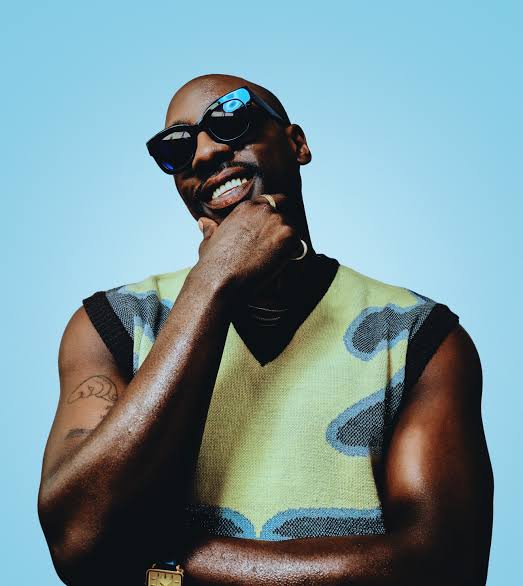
He posted it two days ago with three words and a fire emoji.
November 20th. Tuko live.
Then he let the tracklist do the rest of the talking.
Bien-Aime Baraza, the last member of Sauti Sol to release a solo album, the man whose voice on “Finale” with Alikiba made Kenyans feel something in March that they are still talking about in October, has announced his debut solo project. It is called Alusa Continua. It drops November 20, 2026. It has seventeen tracks. And the artists he assembled around him for the project tell a story about where Kenyan music is in the world right now that is more eloquent than anything any press release could produce.
Alusa Continua. Life continues. The journey goes on.
Against the backdrop of a year in which Kenyan artists have navigated a royalty collection crisis, an AI music disruption, a government intervention in how music money moves, and an industry that sometimes seems designed to exhaust creative people before they get the chance to fully become themselves, Bien chose those two words for the title of his debut.
Life continues. Keep moving. The work is not finished.
That is not a marketing concept. That is a man who has been building toward this moment for years telling his audience exactly how he has been surviving the wait.
What the Tracklist Is Actually Saying
Seventeen tracks. Read them slowly because each one is making a decision.
The album opens with the title track, Alusa Continua, which means Bien spent time and intention deciding that the statement of the album needed to be made before any feature, any collaboration, any external voice entered the room. He stands alone on track one and says: life continues. This is who I am when nobody else is in the frame.
Track two is called All My Enemies Are Suffering.
Let that sit for a moment.
The man who named his album Life Continues put a track called All My Enemies Are Suffering at position two. Not at the end, not buried in the middle, not as a bonus track for people who dig deep. Second track on his debut solo album. The song that arrives the moment the opening statement has been made.
That sequencing is intentional. Alusa Continua says: I am still here. All My Enemies Are Suffering says: and look what happened to the people who thought I would not be.
This will be the most discussed track title in Kenyan music between now and November 20. It will generate memes, debates, thinkpieces, and more organic social media promotion than any budget could buy. Bien knows exactly what he is doing.
Track three, Signs, brings in 2Chainz and Papa Gen Z. An Atlanta trap legend and a Kenyan Gen Z voice on the same Nairobi record. That combination is not a feature list assembled for commercial appeal. It is a statement about the range of the audience Bien believes his music belongs to, from the streets of Atlanta where 2Chainz has been one of rap’s most consistent presences for fifteen years to the youngest Kenyan listeners currently reshaping what mainstream Kenyan music sounds like.
Track five, Kaumbete, features Coster Ojwang, one of the most respected creative voices in the Kenyan arts and comedy space, bringing a cultural familiarity and a Kenyan-specific personality to the project that no international feature could replicate.
Track six, Don’t Go, brings in Uganda’s Joshua Baraka and The Compozers. The same Joshua Baraka who featured on Element Eleéeh’s “AYAYAAH” alongside Bien earlier this year, the cross-border East African collaboration that this blog covered as evidence of the region treating itself as one musical territory rather than five separate national scenes. Bien is continuing that conversation on his debut album deliberately and visibly.
Track eight, How Can I Forget, brings Nigeria’s Oxlade alongside Kenyan artist Ontiri. Oxlade is one of contemporary Afrobeats’ most emotionally sophisticated voices, the artist whose “Ku Lo Sa” became one of the defining records of the genre’s global expansion. His presence on Bien’s debut is a signal about where Bien places his music within the continental conversation, not as a Kenyan artist releasing a Kenyan album, but as an African artist releasing a record that belongs to the continent.
Track eleven is called Po. Box Kakamega, featuring Bryce One. Kakamega is Bien’s hometown. He is naming a track on his debut solo album after the place he came from, the county in western Kenya that built the man before the industry got a chance to shape him. That choice, made on an album that also features 2Chainz and Oxlade, is the clearest possible articulation of the Alusa Continua philosophy. You can go as far as the world will take you. You still come from Kakamega.
Track thirteen, Mueni, features KayCyy, the American artist who appeared on Kanye West’s Donda 2. Another American voice on this record, but a different register from 2Chainz, more ethereal, more atmospheric, the quality that sits inside a midnight R&B record rather than a stadium rap record.
Track fourteen, Mayolo, brings together Femi One and Papaa Maasai. Femi One is Kenya’s most respected female rapper, an artist whose bars have consistently outperformed the genre context they sit in. Her presence here suggests a track that is going to be among the most lyrically serious on the album.
Track fifteen is Finale, featuring Alikiba.
This blog published a post about Finale in March 2026 when it debuted at number two on YouTube’s trending chart with 769,000 views in under twenty hours. The post explored what the record taught every upcoming East African artist about production, collaboration, and the cross-border musical conversation between Kenya and Tanzania. That record is now track fifteen on Bien’s debut album. It was not a single released in isolation. It was a chapter in a larger story that is only now revealing its full shape.
Track sixteen, Success, features Tulwap Kipsigis and Nono Melodies, voices that speak specifically to the Kenyan context and represent Bien’s insistence on keeping his home community visible inside a project of international scope.
And the album closes with a single word. Ah.
No feature. No collaboration. Just Bien, alone again, the way he started on track one, ending the record with the sound that comes after you have said everything that needed to be said.
The Continent Is in Album Season
Bien’s November 20 announcement lands inside what is quietly becoming the most significant African album season in recent memory.
Ayra Starr released her third studio album Starr Girl in August 2026, representing the Nigerian artist’s most ambitious project to date and extending the commercial and critical momentum she has been building since her breakthrough. Wikipedia
Tyla’s A-POP, which this blog covered when it dropped alongside the TikTok Kenya celebration and the OkayAfrica cover interview, established South Africa’s most celebrated current export in the middle of a genuinely creative second album rather than a consolidation of what her debut achieved.
Orchestra Baobab are releasing Made In Senegal on October 23, celebrating five decades of Senegalese music with a new album rooted in tradition and recorded at home in Dakar, representing one of West Africa’s most beloved bands returning to the studio with the weight of fifty years behind them. normanrecords
Adebowale and the Pioneers release Kilofese on October 23, with Adebowale Osunnibu drawing on his years with Egypt 80, Fela Kuti’s legendary band, for a fiery Afrobeat set of driving rhythms and blazing horns that arrives just weeks after Fela’s Zombie 50th anniversary editions were announced. normanrecords
The Fela connection runs through this entire African album season in a way that is impossible to miss once you see it. The Zombie 50th anniversary. Adebowale bringing Egypt 80 energy into 2026. Bien naming his album Alusa Continua, life continues, inside a year when every structural challenge facing African artists has tested exactly that philosophy. The continent is not just releasing albums. It is having a conversation about what endures, what travels, and what it means to keep building when everything around you is shifting.
Why This Particular Album Matters Beyond Kenya
Bien has been the collaborative spine of East African music for years.
His feature credits read like a map of every significant conversation happening in the region. He appeared on Element Eleéeh’s “AYAYAAH” connecting Kenya and Rwanda and Uganda in a single track. He released “Finale” with Alikiba, the record that this blog argued was the most important cross-border East African collaboration of early 2026. He has worked with Sauti Sol for over fifteen years, building one of the most celebrated catalogues in the history of Kenyan music as part of a group before ever releasing a project under his own name alone.
The debut solo album from an artist with that history is not a career beginning. It is a declaration of readiness, a public statement that the time has come to put everything accumulated under a single name and let the world hear what that adds up to.
The collaborators Bien assembled confirm what that readiness looks like in practice. This is not a Kenyan artist releasing a local project and hoping it travels. This is an artist who has already demonstrated he can build records that cross borders, who has proved his voice belongs in the same conversation as Oxlade and 2Chainz and Alikiba, and who has now decided to release the full statement that all of that preparation was pointing toward.
Alusa Continua arrives on November 20 as the most anticipated debut solo album in Kenyan music in 2026 and as one of the most significant African album releases of Q4 from any country on the continent.
What This Means for Every Artist Still Building
The Bien announcement carries the same energy that every veteran artist post on this blog has carried this year, from Mejja’s debut album to Nyashinski’s Sony deal to Bensoul’s number one record under his own label.
The pattern is consistent enough now to state directly.
The artists who build the most deliberately, who take the time to develop their craft inside collaborative environments before making their full solo statement, who assemble features not for commercial hedging but as genuine creative conversations with voices they respect, are the artists whose debut statements land with the weight of everything that preceded them.
Bien has been building toward Alusa Continua for the entirety of his career. The Sauti Sol years were not a detour from a solo path. They were the apprenticeship that makes a debut like this possible. Every collaboration on this tracklist is not a strategic feature. It is a relationship built over years of being the kind of artist that 2Chainz and Oxlade and Alikiba want to be in the room with.
Building that kind of reputation takes time. It takes consistency. It takes releasing music built on production solid enough to carry the weight of who you are and where you come from without compromise.
At mBeatz, the catalogue carries the sounds that Bien’s musical world draws from. Afro-pop, Afro-R&B, East African soul, Bongo Flava-influenced production, and everything that connects the Kakamega boy to the continental artist the tracklist of Alusa Continua has just confirmed him to be. Every beat comes with instant WAV delivery and a proper licence document. Pay with MPesa, Airtel Money, Visa, Mastercard, Apple Pay, PesaPal, or bank transfer from anywhere in Africa and beyond.
Browse the mBeatz catalogue at mbeatz.org and start building your version of Alusa Continua tonight.
Which track on the Bien tracklist are you most excited about and which feature surprised you the most? Drop it in the comments. November 20 cannot come soon enough.


0 Comments
Leave a Comment