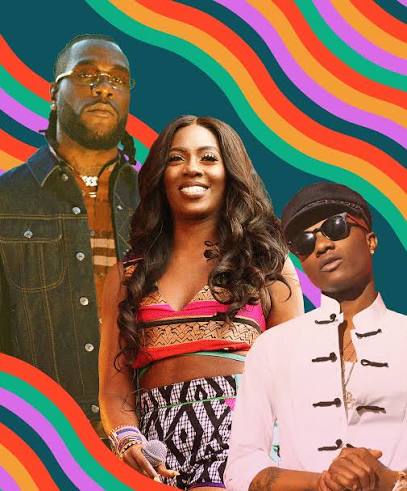
The world is asking questions about Afrobeats at a rate that would have been unimaginable five years ago.
Americans are Googling it. Europeans are Shazam-ing it at festivals. Playlist curators in Seoul and São Paulo and Stockholm are adding it to rotations built for audiences who cannot name a single Nigerian city but can feel the groove before the first bar finishes. The search volume for Afrobeats in English-speaking markets has exploded in 2026 in ways that streaming data, festival bookings, and Billboard chart positions are now reflecting simultaneously.
And most of what those searches find is either too shallow, too historical, or written by people who encountered the genre from the outside rather than built their creative lives inside it.
This post answers every question being asked about Afrobeats in 2026. Not from the outside looking in. From inside the music, looking out at a world that is finally paying attention.
What Is Afrobeats? The Real Answer
Afrobeats is a contemporary West African popular music genre that fuses traditional African rhythms with hip-hop, R&B, dancehall, and electronic music influences, originating primarily from Nigeria and Ghana in the early 2000s and expanding into a global phenomenon by the 2020s.
The name is misleading to some first-time listeners. Afrobeats is not Afrobeat, the singular genre pioneered by Fela Kuti in the 1970s. Afrobeat, spelled without the S, was a specific political and musical movement built on Yoruba rhythms, jazz, funk, and social commentary. It was Fela's creation and it belongs to him in the way that a genre can belong to a single visionary.
Afrobeats, with the S, is something that grew from that soil but became its own completely different thing. It is younger, more commercially oriented, more sonically diverse, and more explicitly built for the dance floor rather than the political stage.
What unites every Afrobeats record, from the biggest Burna Boy album to the most recent Afrobeats instrumental sitting in a producer's catalogue right now, is a set of sonic characteristics that the body responds to before the mind has time to analyze them.
The percussion stack is the foundation. Typically built around a pattern that sits between 90 and 115 BPM, the groove swings in a way that straight-time Western pop does not. The kick falls where you expect it and then the snare or clap arrives slightly later than a Western listener's internal metronome anticipates, creating a physical pull that neuroscientists studying music and movement have identified as one of the strongest triggers for involuntary body movement in cross-cultural listening studies.
The bass is warm and sits underneath the mix rather than cutting through it, supporting the groove rather than competing with it. The melodic elements, whether guitar, keyboard, or synthesizer, carry an optimism that is culturally specific to West African musical tradition, a brightness that persists even in songs about difficult subjects.
And the vocal sits in all of it with a conversational ease that comes from a music culture where the boundary between speaking and singing has always been more permeable than in Western pop tradition.
What Are Afrobeats Songs? The Records That Defined the Genre in 2026
Understanding a genre through its records is always more useful than understanding it through definition alone.
In 2026, the Afrobeats records that are shaping the global conversation include Wizkid and Asake's "Jogodo," which crossed 64 million Spotify streams within months of release. Rema's return with "Tea" marked the opening of a new creative era from the artist whose "Calm Down" became the gateway record for millions of listeners outside Africa encountering Afrobeats for the first time. Ayra Starr and Rema's collaboration reached one million YouTube views in eight hours, a metric that reflects a listener base that has grown from a regional audience into a genuinely global one.
Burna Boy performed at the FIFA World Cup Final halftime show in July 2026 alongside Madonna, Shakira, and BTS, the clearest possible indication of where Afrobeats sits in the global mainstream in 2026. Not as an exotic flavoring added to a Western lineup. As a headlining presence whose draw is understood by the world's largest sporting broadcast.
These are not niche streaming numbers. These are not chart positions on a regional African chart that do not translate internationally. These are mainstream global metrics, sitting in the same algorithmic space as every other genre you have been consuming your whole musical life.
Where Did Afrobeats Originate From?
The short answer is Nigeria, specifically Lagos, in the early 2000s.
The longer answer requires understanding that Afrobeats did not arrive fully formed from a single moment or a single artist. It crystallized out of a musical environment in Lagos that was already extraordinarily fertile, absorbing highlife from Ghana, jùjú from Yoruba tradition, hip-hop from the United States, dancehall from Jamaica, and R&B from across the Atlantic, and producing something from the synthesis that could only have come from Lagos specifically.
The artists most directly associated with establishing what Afrobeats would sound like in its early commercial form include 2Baba, formerly known as 2face Idibia, whose record African Queen in 2004 introduced the sonic vocabulary of the genre to a generation. D'Banj and Don Jazzy's Mo'Hits era in the mid-2000s gave the genre its commercial architecture. P-Square built the pan-African audience that proved the music could travel beyond Nigeria's borders. And Wizkid's Ojuelegba in 2014 demonstrated that a song rooted in specific Lagos geography and Yoruba-inflected English could find listeners in London, Toronto, and Tokyo simultaneously.
Ghana's contribution through highlife tradition and through artists like Sarkodie and Stonebwoy gave the genre a West African breadth that prevented it from being reduced to a purely Nigerian story.
By 2016, when Wizkid's feature on Drake's One Dance introduced the Afrobeats groove to hundreds of millions of listeners who had never previously encountered it, the genre had been building for fifteen years. The global audience experienced it as a sudden arrival. The artists who had built it experienced it as fifteen years of work finally finding the audience it always deserved.
When Did Afrobeats Start?
Depending on how strictly you define the genre, Afrobeats as a recognizable contemporary sound began taking shape between 2000 and 2005 in Lagos.
The term itself came into broader use around 2011 and 2012 when British music journalists and radio presenters, particularly those working in London's African and Caribbean diaspora music scene, began applying it to the wave of Nigerian music that was reaching UK audiences through the diaspora community.
Afrobeats as a genre category in Western music journalism is therefore roughly fifteen years old. Afrobeats as a living musical practice being made by artists in Lagos is closer to twenty-five years old. And the African musical tradition that Afrobeats draws from is centuries old, making any single start date both accurate within its frame of reference and wildly incomplete as a description of the music's actual roots.
What 2026 represents is not the beginning of Afrobeats. It is the moment when the genre's global commercial reach has finally caught up with the cultural weight it has always carried within Africa.
Is Afrobeats Reggae? The Comparison Question Answered
No. But the confusion is understandable and worth explaining properly because the answer reveals something important about how Afrobeats actually works.
Both Afrobeats and reggae share certain qualities that make Western listeners reach for surface-level comparisons. Both are groove-based rather than melody-dominant in their foundational architecture. Both emerged from African diasporic musical traditions, reggae from Jamaica's African Caribbean heritage, Afrobeats from West Africa's own deep roots. Both have been described as music that makes the body move before the mind decides to.
But the rhythmic DNA of the two genres is structurally different in ways that any producer working in either tradition understands immediately.
Reggae's defining rhythmic feature is the skank, the offbeat guitar or keyboard chord that falls consistently on the second and fourth beat of every bar, creating the specific loping backward pull that makes a reggae groove immediately identifiable. The one drop drum pattern, where the kick falls on beat three rather than the downbeat, reinforces this backward feel.
Afrobeats sits on the downbeat rather than against it. The groove swings forward rather than pulling backward. The percussion is denser and more complex, layering multiple rhythmic patterns simultaneously in a way that reflects the polyrhythmic traditions of West African drumming rather than the straightforward rhythmic reduction of Caribbean music.
Afrobeats has been influenced by dancehall, which is a reggae subgenre, and that influence is audible in some artists' work. But influence is not identity. Afrobeats is not reggae any more than rock and roll is blues, despite rock and roll being built on blues foundations.
Afrobeats vs Amapiano: The Comparison That Matters Most in 2026
This is the comparison being searched most urgently in 2026 because both genres are simultaneously at peak global visibility and listeners who have discovered one often want to understand how it relates to the other.
Afrobeats and Amapiano are both African, both built for movement, and both dominating global streaming charts in 2026. Beyond that, they are structurally very different musical experiences.
Afrobeats is West African in origin, primarily Nigerian, built on percussion stacks that swing forward at tempos between 90 and 115 BPM, with vocal melodies and hooks that carry the listener through the record. The energy is upward and outward, built for singing along and for the kind of communal euphoria that a festival crowd produces when a Wizkid record drops.
Amapiano is South African, emerging from the townships of Johannesburg and Pretoria, built around the log drum, a specific bass synth pattern that creates a hypnotic rumbling groove underneath more sparse and spacious arrangements. The tempo is slower and the energy is more inward and trance-like, built for the sustained movement of an extended dance floor experience rather than the peak moment release of an Afrobeats chorus.
Both genres are being blended and cross-pollinated in 2026 in ways that are producing some of the most exciting African music being made right now. DopeNation's "Kakalika" fusing Ghanaian azonto with Amapiano made Spotify's global Songs of Summer list. Multiple Afrobeats producers are incorporating log drum elements into their productions. The boundary between the two genres is becoming increasingly permeable even as each maintains its distinct identity.
Understanding both is increasingly necessary for any artist or producer working in African music in 2026.
How to Dance Afrobeats: What the Body Already Knows
Every culture has music where the dance is inseparable from the sound and Afrobeats is among the most complete examples of this relationship in contemporary popular music.
The foundational Afrobeats dance vocabulary emerges naturally from the rhythmic structure of the music. The groove falls slightly behind where a Western-trained body expects the beat to land, creating an instinctive response to lean into that gap, to find the rhythm by moving toward it rather than waiting for it to arrive. This is why people who have never consciously learned an Afrobeats dance step can often find a convincing version of the correct movement simply by responding honestly to the music without overthinking it.
The specific movement vocabulary includes the Shaku Shaku, which was a Nigerian street dance that became globally recognizable. The Zanku, introduced by Zlatan Ibile in 2018, became one of the most globally replicated African dance forms in the years following its introduction. The Leg Work, the Skelewu, and dozens of other named dance styles all emerged from specific Afrobeats records and spread through social media in ways that made Afrobeats the most danced genre on TikTok across multiple years.
The short answer to how to dance Afrobeats is: let the percussion tell your feet where to go and let the bass tell your hips how to respond. The longer answer is that the specific dances evolve constantly from the music itself, and the best way to learn them is to immerse yourself in the records where they were born.
Afrobeats Instrumental: What Producers and Artists Need to Know
The Afrobeats instrumental is where every Afrobeats record begins and where the most important creative decisions in the genre are made before a single vocal is recorded.
The qualities of a legitimate Afrobeats instrumental as opposed to a generic approximation of the genre by producers outside the tradition are specific and audible to anyone who has spent meaningful time listening to the genre.
The percussion programming must carry the swing feel that is native to the genre, not a quantized grid that flattens the natural push and pull of West African rhythmic tradition. The kick pattern must create the forward momentum that makes an Afrobeats groove compulsive rather than merely pleasant. The bass must sit in the frequency range and with the tonal quality that gives Afrobeats its physical warmth rather than the punchy, cutting bass that belongs to trap or pop production.
The melodic elements, whether guitar samples, keyboard progressions, or synthesized melodies, must carry the harmonic optimism that is culturally specific to West African music. This is the quality that makes an Afrobeats record feel like the sun is out even when the lyrical content is about something complicated.
Finding Afrobeats instrumentals that carry all of these qualities, produced by people who understand the genre from the inside rather than approximating it from the outside, has historically been difficult for artists outside West Africa and for African artists whose banking infrastructure did not connect easily to Western beat marketplaces.
That difficulty has been solved.
mBeatz carries a full catalogue of Afrobeats instrumentals produced with the sonic DNA of the genre intact, available for instant download in full WAV quality with a proper licence document included. Every beat built by producers who understand what Afrobeats actually needs rather than what it sounds like from a distance.
Afrobeats for Sale: How to Buy Afrobeats Beats in 2026
The question being searched as "Afrobeats for sale" is the commercial intent version of the same need that every artist working in the genre eventually arrives at: where do I find a professional Afrobeats instrumental that I can record over, own properly, and release without legal complications?
The answer in 2026 has more options than ever and also more traps than ever.
The traps are the beat marketplaces built for Western audiences where "Afrobeats" is a genre tag applied to instrumentals made by producers in Atlanta or Berlin who heard Afrobeats on a playlist and approximated what they thought it sounded like. These beats are everywhere, many of them are cheap, and most of them carry the specific quality problem described in the section above. They are technically competent but culturally hollow. The groove is close but not right. And recording a vocal over a beat that is almost right but not quite is one of the most frustrating experiences in music production because the problem is real but difficult to name.
The solution is to find Afrobeats instrumentals produced by people who built the genre from inside the culture rather than studying it from the outside.
The mBeatz Afrobeats catalogue is built exactly on this principle. Every Afrobeats beat available for purchase comes with instant untagged WAV delivery, a proper PDF licence document specifying every permitted use across every streaming platform, and the assurance of cultural authenticity that comes from production built inside the African music tradition rather than adjacent to it.
Payment works for every artist regardless of where they are building from. MPesa and MPesa Till for East Africa. Airtel Money across seventeen African countries. Visa and Mastercard from any country in the world with internationally enabled bank cards. Apple Pay for any artist with a linked Apple device anywhere on earth. PesaPal for Kenya and East Africa. Bank transfer for artists who prefer traditional banking infrastructure.
Instant delivery. Proper documentation. Sound that is right from the inside out.
Afrobeats Is Not Arriving. It Has Already Arrived.
The search data for Afrobeats in English-speaking markets in 2026 represents the leading edge of a mainstream awareness that has been building inside Africa for twenty-five years and is now completing its global expansion.
The questions being asked, what is Afrobeats, where did it come from, how is it different from Amapiano, where do I find instrumentals for sale, are the questions of an audience that has just discovered something and wants to understand it properly. These are not casual questions. They are the questions of a listener who has had a genuine physical and emotional response to the music and needs language to describe what happened to them.
That audience is enormous and it is growing. The artists who are positioned inside that growth, releasing properly licensed Afrobeats records with production that is built correctly from the inside, are the ones whose streaming numbers, playlist placements, and sync opportunities will compound as the global awareness continues to expand.
The foundation is the beat. The beat is where it begins.
Browse the full mBeatz Afrobeats beats catalogue and find your sound today.
Which Afrobeats record converted you? The one that made you understand what the genre actually is? Drop it in the comments.
.jfif)
.jfif)
0 Comments
Leave a Comment