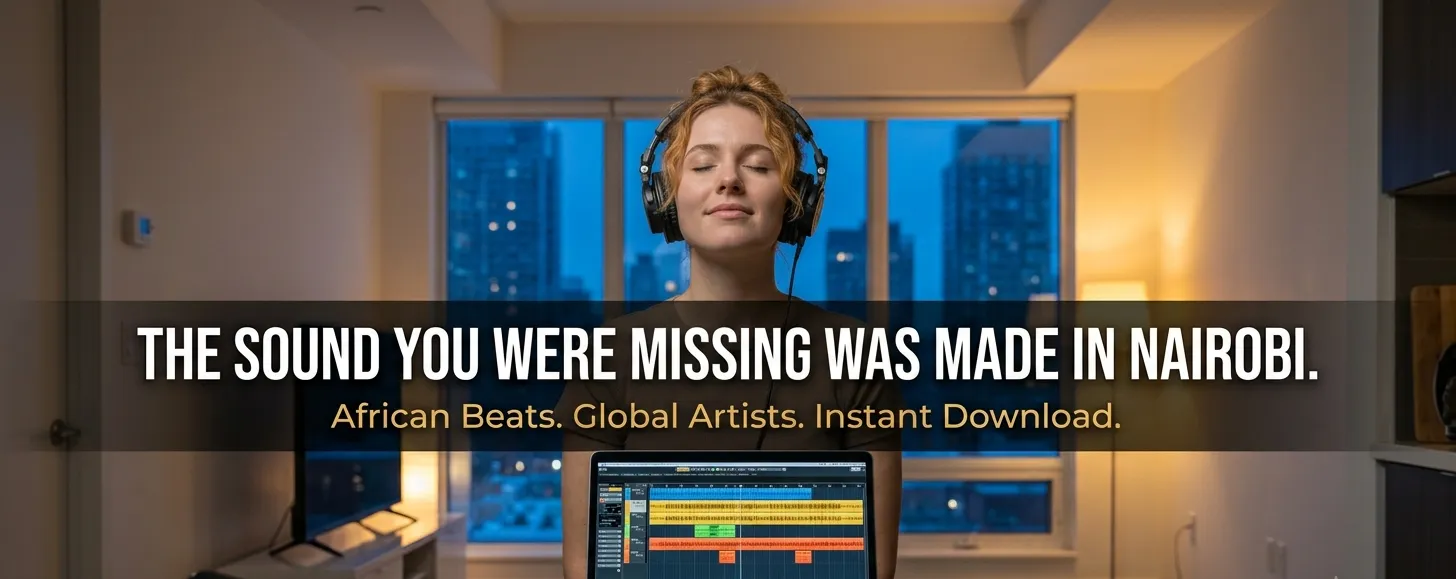
Let me tell you exactly when it clicked.
I was in the studio in Toronto, sometime in late 2024, trying to make an R&B record that felt different. Not just different from what I had made before. Different from everything that was saturating every playlist I had been on for the previous three years. The trap hi-hats. The 808s. The chord progressions that had been recycled through so many sessions that even the most casual listener could hear them coming before they arrived.
Nothing was landing. Every instrumental I tried felt like furniture I had seen in someone else's house.
Then my engineer played something. He did not tell me what it was. He just hit play and let it breathe for a few seconds.
The groove was warm. The percussion was doing something rhythmically that I could not immediately categorize but that my body understood before my brain caught up. There was space in it, deliberate breathing room, the kind that invites a vocal to exist inside the music rather than fight its way over it.
I asked him what it was. He said it was an Afro-pop beat from a Kenyan producer.
I recorded over it the same night. Three takes. The song was done.
That was not luck. That was the African sound doing exactly what it has been doing to listeners all over the world for the past decade, making the body move and the creative instinct follow, regardless of where the listener grew up or what genre they came from.
What Is Actually Happening in the Charts Right Now
If you are an artist based in the US, Canada, Australia, or the UK and you have been paying attention to what is competing at the highest level of the global music industry in 2026, you already know that the African sound is not a trend anymore.
Burna Boy is described as Africa's biggest music export and consistently dominates global streaming charts and stadium tours. He is selling out arenas in London, New York, and Paris while also performing at the 2026 AFCON finals for a record described as made for the culture. Burna Boy recently perfomed DAI DAI with Shakira in the 2026 World Cup ceremonies. Tyla from South Africa, performed with Future as well.
Rema was announced to perform at the 2026 FIFA World Cup opening ceremony at SoFi Stadium in Los Angeles, one of the most watched live music moments on the planet, alongside his record Calm Down which crossed into territories that Afrobeats had never previously penetrated at that scale.
Tems won the Grammy Award for Best African Music Performance in 2025 and has collaborated with Beyoncé, Rihanna, Future, and Drake. Her vocal sits on records that are studied in production courses at major music schools because of how effectively she inhabits an African-influenced groove without losing a single thread of her own identity.
Tyla took home Best Afrobeats Artist and Social Song of the Year at the 2026 AMAs. Wizkid and Asake's "Jogodo" crossed 64 million Spotify streams within months. Ayra Starr and Rema's collaboration reached one million YouTube views in eight hours.
These are not niche streaming numbers. These are not African chart positions that do not translate internationally. These are mainstream global metrics, on the same platforms, competing in the same algorithmic space, as every other genre of music you have been making and consuming your whole career.
The African sound is not knocking on the door of global pop in 2026. It is already inside, sitting at the head of the table, and has been redecorating for at least three years.
Why the Groove Does Something Different
There is actual neuroscience behind why Afrobeats and African-influenced music are physically irresistible. Research into music and movement has consistently found that rhythms with a strong pulse combined with syncopation, where the beat lands in unexpected places, create the strongest urge to move in listeners.
For producers and artists who have been working in Western genres for years, this is the technical explanation for what you have been feeling intuitively every time a Burna Boy record or a Wizkid record or an East African Afro-pop production hits you differently than what you have been building.
The rhythm is speaking to something older and more fundamental than genre preference. The clave pattern, the 3-2 or 2-3 rhythmic structure common in Afrobeats, shares roots with West African traditional percussion traditions that predate the recorded music industry by centuries. The body recognizes it before the mind processes it.
For an R&B artist in Toronto or an alternative artist in Melbourne or a pop songwriter in London, recording over an African beat is not an appropriation exercise or a genre tourism decision. It is a creative conversation with the most emotionally resonant musical tradition currently operating in the global mainstream, on its own terms, at the highest production level it has ever reached.
The artists who understand this are already building with it. The artists who are still treating it as a niche curiosity are going to spend 2027 wondering why their sound feels dated.
The East African Angle Nobody Is Talking About
Most international artists who are paying attention to the African sound are focused on Nigerian Afrobeats and South African Amapiano because those are the sounds that have received the most mainstream Western coverage.
East Africa is where the next wave is forming.
Amapiano is moving from cool club trend to essential global dance language in 2026, and Afro-house following the same trajectory through underground scenes that are now moving into mainstream visibility. East African artists like tg.blk have earned inclusion in Apple Music's Africa Rising Class of 2026, introducing her artistry to wider global audiences seeking more intimate and genre-fluid African music. Njerae became Kenya's most streamed artist with a sound she describes as Afro-Indie, a category she essentially invented for herself because no existing label captured what she was making.
East African production carries specific qualities that differentiate it from the West African sound that most international producers have been studying. The Bongo Flava tradition from Tanzania brings a warmth and romantic melodic sensibility that sits differently under a vocal than Lagos-influenced production. The Kenyan Afro-pop tradition carries Swahili rhythmic phrasing that creates space in a groove in a way that English-language production structures often do not.
For an international artist looking to build with the African sound without simply replicating what Nigerian producers are already doing at scale, East African instrumentals represent a genuine creative frontier. The sound is distinct, the catalogue of quality producers is growing rapidly, and the mainstream awareness of the East African musical tradition globally is still early enough that building with it now means arriving ahead of the curve rather than chasing it.
The Practical Reality of Buying African Beats From Anywhere in the World
Three years ago, an artist in Toronto who wanted a professional East African beat had a genuine logistical problem. Finding the right producer was difficult. Communicating across time zones was slow. Getting a WAV file and a proper licence document through a payment system that worked for a Canadian bank account often involved friction that killed creative momentum before it could build.
That problem no longer exists.
mBeatz is a Kenyan-based beat marketplace built specifically for the East African and broader African sound, and it is accessible to any artist anywhere in the world with the payment infrastructure to match. If you are in Canada, the United States, the United Kingdom, Australia, Germany, Japan, or anywhere else with access to a Visa card, Mastercard, or Apple Pay, you can browse the catalogue, preview beats in full quality, complete a purchase in under five minutes, and have a professional WAV file and a proper licence document in your inbox before the creative moment you were chasing has time to pass.
No international wire transfer complications. No currency conversion headaches requiring a call to your bank. No waiting for a producer in a different time zone to wake up and manually send you a file.
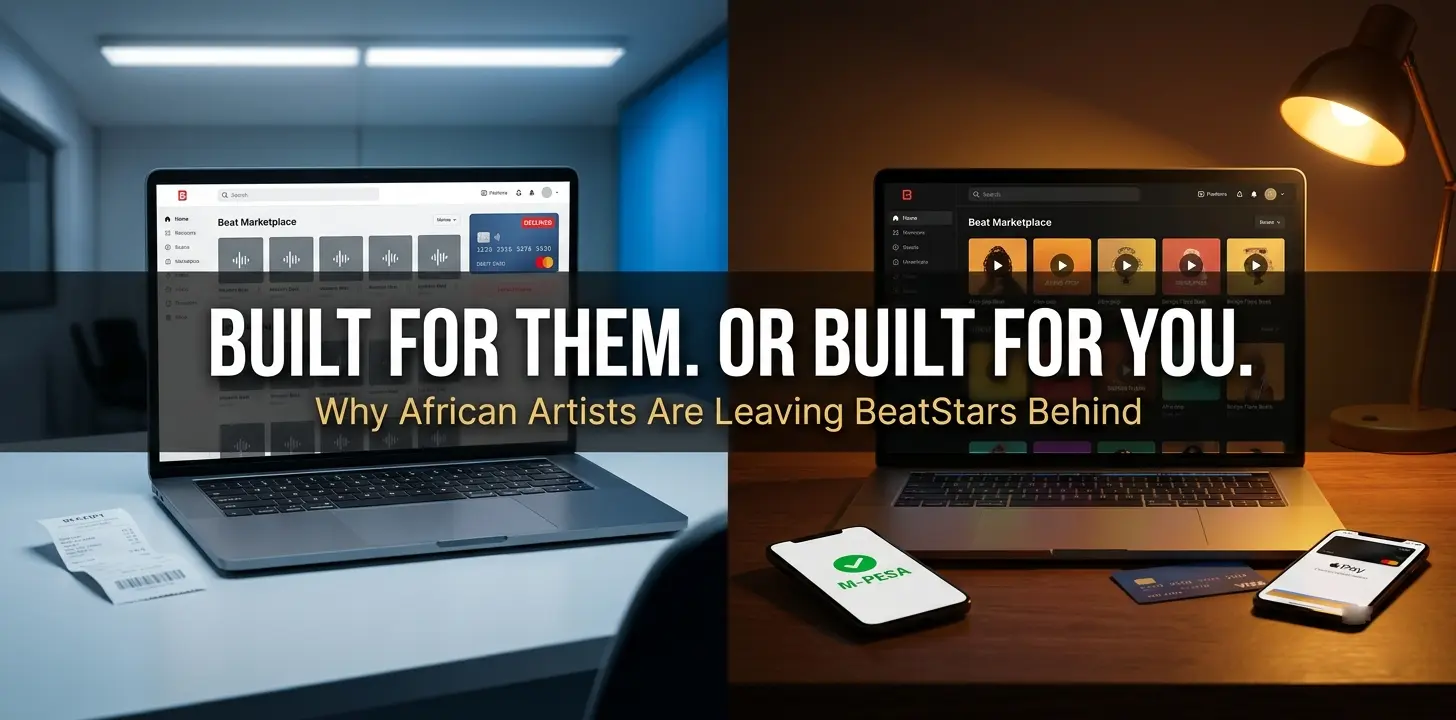
Card payment from any country that issues internationally enabled debit or credit cards. Apple Pay for any artist with an iPhone and a linked card. The transaction is instant. The WAV delivery is instant. The licence document is instant.
For artists in East Africa, MPesa makes the same transaction even simpler. But for every international artist reading this from outside the MPesa network, the barrier to accessing East African production professionally in 2026 is genuinely lower than ordering something from any other online marketplace.
The beat you have been looking for, the groove that does something your current production is not doing, the sound that made you stop scrolling every time a Wizkid or Burna Boy or Rema record played without warning, is sitting in a catalogue built in Nairobi and accessible from wherever you are recording tonight.
What You Actually Get
Every beat in the mBeatz catalogue comes with the following.
A full untagged WAV file at professional recording quality. No producer voice tag interrupting your recording session. No watermark running through the beat you are trying to build a career on. Clean audio, ready for your vocal and your mixing engineer from the first take.
A proper licence document in PDF format specifying exactly what you are permitted to do with the beat, which platforms, which stream limits at each tier, and what your rights are if you want to move from a lease to exclusive ownership as the record grows. That document is what protects you when the streams accumulate, when a sync opportunity arrives, or when a label comes asking about your catalogue's rights chain.
A catalogue built around the sounds that East African music is producing right now. Afro-pop, Bongo Flava-influenced, Afrobeats, Afro-house, Afro-R&B, Gengetone, and everything living between those genres in a region that is generating some of the most creatively fertile music production on the planet in 2026.
All of it accessible from Toronto, Sydney, London, Berlin, Atlanta, or anywhere else you are making music tonight.
The Sound You Have Been Missing Has an Address
Afrobeats is not adapting to global pop in 2026. Global pop is adapting to Afrobeats.
That sentence represents a complete inversion of how the relationship between African music and Western mainstream production has operated for the entire history of the recorded music industry. It is happening right now, in real time, and the artists who position themselves inside that shift while it is still early enough to feel fresh are the ones whose music will sound inevitable rather than derivative when people look back at this period.
The Toronto artist who builds over an East African Afro-pop instrumental tonight is not chasing Burna Boy or Wizkid. They are drawing from the same well those artists draw from. They are working with the same rhythmic intelligence, the same melodic tradition, the same production philosophy that has been converting listeners on every continent simultaneously.
The well is in Nairobi. It is accessible from anywhere. And the beat that unlocks your next record is already in the catalogue waiting.
Browse the full mBeatz catalogue at mbeatz.org and find your sound tonight. Pay with Visa, Mastercard, Apple Pay or bank transfer from any country in the world. Your WAV file and licence arrive instantly.
Are you an international artist who has been building with African beats? Tell us in the comments where you are based and what the sound opened up for you creatively.
.jfif)
0 Comments
Leave a Comment