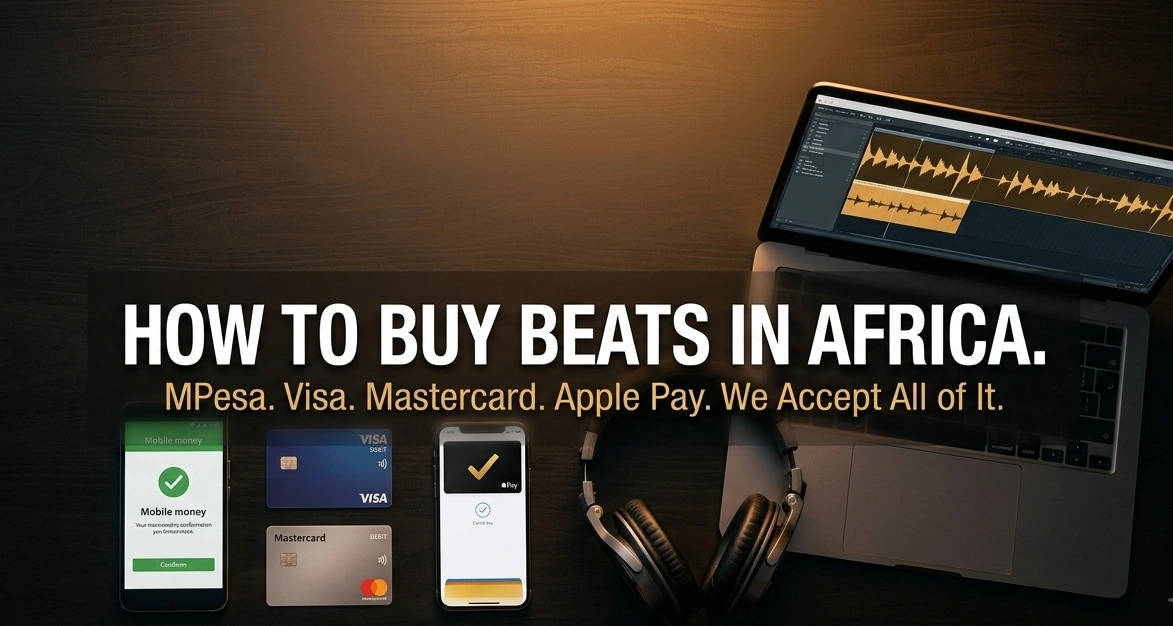
The beat you need for your next record exists right now.
It is sitting in a catalogue somewhere, already produced, already mixed, already at the quality level your vocal deserves. The only thing standing between you and that Instrumental is knowing how to find it, how to pay for it from wherever you are in Africa, and how to make sure what you receive is actually yours legally once the payment clears.
This guide covers all three. Start to finish. For every country on the continent.
Why Buying Instrumentals Online Changed Everything for African Artists
Three years ago, an artist in Accra who wanted a professional Afrobeats instrumental had a genuinely complicated problem. The best producers were either inaccessible personally, priced for Western budgets, or operating through payment systems that simply did not work smoothly for African bank accounts and mobile money wallets.
That problem has largely been solved in 2026.
The combination of mobile money infrastructure across East and West Africa, the global rollout of Apple Pay, the near-universal acceptance of Visa and Mastercard debit cards including those issued by African banks, and the rise of beat marketplaces built specifically for African artists has made buying a professional beat from anywhere on the continent a genuinely straightforward transaction.
What has not changed is the need to understand what you are buying, how the payment flows, and what you should receive on the other side of the transaction. That knowledge is what separates an artist who builds a clean catalogue from one who spends money and ends up with something they do not fully own.
Step One: Understand What You Are Actually Buying
Before the payment method conversation, the ownership conversation.
When you buy a beat online, you are not buying the beat itself. You are buying a licence to use the beat. That distinction matters enormously and catches out more African artists than any other single issue in the Instrumental purchasing process.
A licence is a legal document that specifies exactly what you are allowed to do with the instrumental. How many streams. Which platforms. Whether you can monetise. Whether the beat is leased to other artists simultaneously or exclusive to you alone. What happens when the beat accumulates beyond the licence limits.
The three licence types you will encounter most frequently are as follows.
A basic or MP3 lease covers you for smaller releases, typically up to around five thousand streams across platforms. It gives you an MP3 file quality and is the entry point for artists testing a sound before committing to it fully.
A premium or WAV lease covers professional releases, typically up to one hundred thousand streams, and delivers a full WAV file suitable for professional mixing and mastering. This is the minimum recommended for anything you intend to distribute seriously.
An unlimited or exclusive licence removes stream caps entirely. Exclusive means the beat is pulled from the catalogue after your purchase and no other artist can record over it. This is the option for records where the sound needs to be uniquely yours.
Always demand a PDF licence document with every purchase. Not a screenshot. Not a WhatsApp confirmation. A document with your name, the beat title, the licence tier, the permitted uses, and the producer's details. That document is what protects you if a Content ID claim fires or if a label comes asking about rights later.
Step Two: Know What Files You Should Receive
The files that arrive in your inbox after a Instrumental purchase tell you immediately whether you are dealing with a professional producer or an amateur operation.
A legitimate WAV lease delivers a full untagged WAV file, meaning no producer voice tag running through the instrumental ruining your recording session, at a sample rate of at least 44.1kHz and 16-bit depth minimum, with 24-bit being the professional standard. The file should be named clearly with the beat title, BPM, and key information so your audio engineer does not have to guess.
A legitimate premium purchase may also include tracked-out stems, meaning separate audio files for each element of the beat such as drums, bass, melody, and atmosphere. Stems give your mixing engineer the ability to adjust individual elements of the instrumental around your vocal rather than treating the whole beat as a fixed stereo file. This is the difference between a mix that sounds professional and one that sounds like a vocal pasted onto a pre-made track.
If you receive an MP3 from a WAV purchase, contact the producer immediately. If you receive a tagged file when you paid for untagged, contact the producer immediately. Professional operations fix these issues instantly. Operations that ignore them are telling you something important about how they will handle any future problems.
Step Three: Paying For Instrumentals Across Africa in 2026
This is the section that matters most for artists across the continent because the payment question is where most African artists hit friction.
The honest answer is that the friction has reduced dramatically and for most African countries there is now at least one fast, reliable payment method available for purchasing Instrumentals from a quality marketplace.
MPesa is the simplest and fastest option for artists in Kenya, Tanzania, and the broader East African MPesa network. A beat purchase using MPesa takes under four minutes from finding the right sound to receiving the WAV file in your inbox. No card needed. No bank account needed. Your phone and your MPesa balance are all that is required. mBeatz, a Kenyan-based beat marketplace built specifically for the East African and broader African market, accepts MPesa directly for exactly this reason. The infrastructure matches how East African artists actually move money in their daily lives.
Visa and Mastercard debit and credit cards work across the entire continent for any artist whose bank has issued an internationally enabled card. This includes the majority of formal bank accounts across Nigeria, Ghana, South Africa, Uganda, Rwanda, Ethiopia, Egypt, Morocco, Senegal, Côte d'Ivoire, and dozens of other African countries. If your card has the Visa or Mastercard logo and is enabled for international transactions, it will work at any professional beat marketplace. mBeatz accepts Visa and Mastercard from any country in the world, meaning an artist in Lagos, Accra, Kigali, or Addis Ababa can purchase a beat with the same speed and ease as someone in Nairobi.
Apple Pay is available to any artist using an iPhone with a card linked to their Apple Wallet. For African artists who discovered mBeatz through international playlists, through diaspora communities in the UK, United States, Canada, or Australia, or simply through an iPhone with a linked international card, Apple Pay is the fastest checkout experience available anywhere. One tap. Face ID confirmation. Done. The WAV file is on its way before you have put the phone down.
Bank transfer is the option for artists who prefer a direct transaction between accounts. It requires slightly more patience as processing times vary between one and three business days depending on the sending bank and the receiving institution, but it is a fully legitimate and commonly used payment method for artists who are more comfortable with traditional banking infrastructure than digital wallets.
The important thing to understand is that no African artist in 2026 should be using a payment method that cannot be traced, disputed, or documented. Untraceable payment methods, cash sent via informal channels, or transfers to personal accounts without a formal receipt attached, offer no protection if the files never arrive or if the producer later claims the transaction never happened. Every legitimate beat marketplace issues a payment receipt and a licence document simultaneously. That documentation chain is your protection.
Step Four: What to Check Before You Pay
Five things. Every time. No exceptions.
The preview quality. A producer who tags their previews aggressively to the point where you cannot properly evaluate the beat is hiding something. Professional producers tag lightly enough that you can hear the full arrangement, the mix quality, the energy of the groove, before committing to a purchase.
The licence document. Request to see a sample licence before you buy if none is displayed on the product page. A legitimate operation has nothing to hide about what their licence covers. An operation that deflects this question is telling you the documentation does not exist.
The file format promised. WAV should mean WAV. MP3 should mean MP3. The specifications should be stated clearly in the product listing, not hidden in fine print or confirmed only after payment.
The delivery method. Legitimate beat purchases deliver files instantly to your email after payment confirmation. Manual delivery that requires you to chase a producer for your files is not a professional operation regardless of how good the beat sounds.
The producer's catalogue. A producer who has been selling beats professionally for any meaningful period of time has a catalogue that you can browse. Listen to multiple beats before choosing one. The producer's consistency of quality across their catalogue tells you more about what you are buying than the single Instrumental you are considering.
Step Five: Where to Buy Instrumentals If You Are an African Artist Right Now
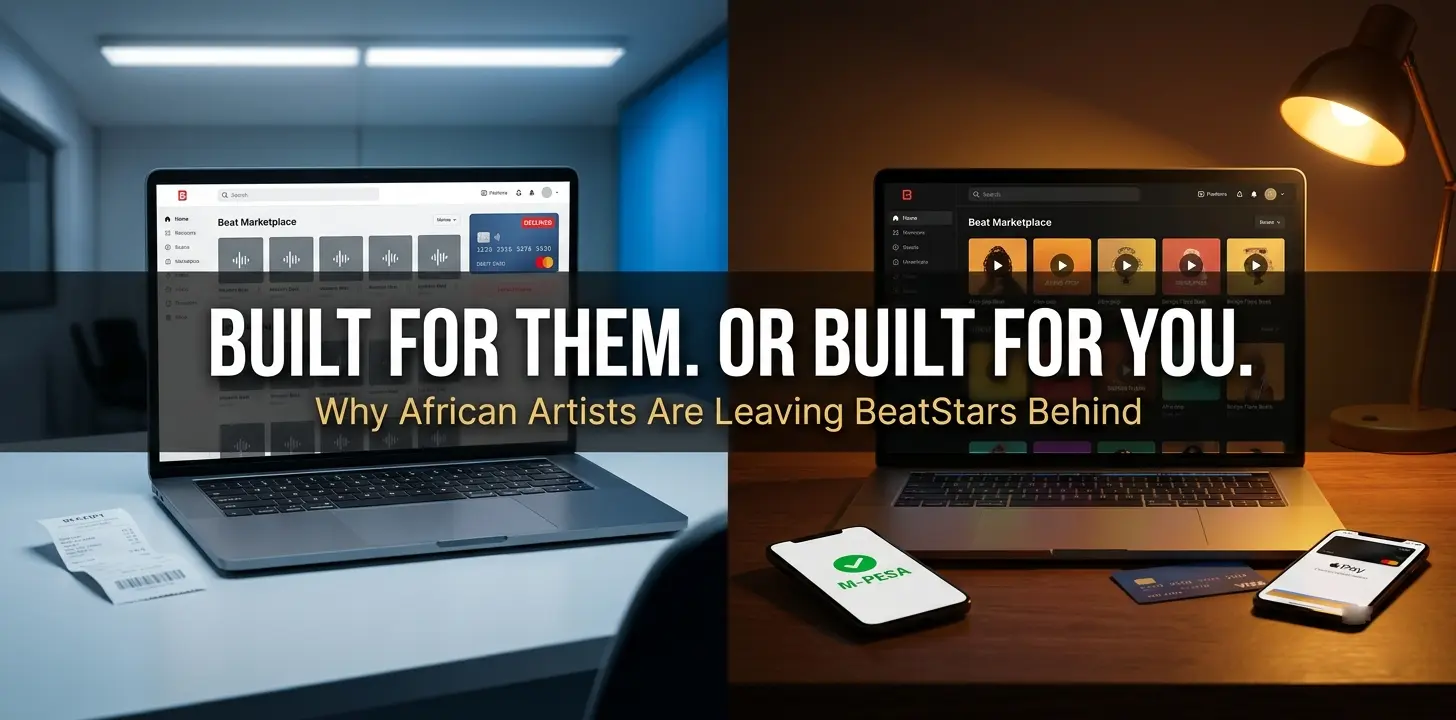
The global beat marketplace is dominated by platforms built for Western artists and priced and structured accordingly. For an artist in Nairobi, the experience of browsing a US-focused beat platform and attempting to purchase using an East African payment method has historically been frustrating at best and impossible at worst.
mBeatz exists specifically to solve that problem. Built in Kenya, rooted in the East African sound, and stocked with Afro-pop, Bongo Flava, Afrobeats, Gengetone, Afro-house, and every genre living between those sounds, it is a catalogue built by producers who understand what African ears respond to and what African artists need when they step into the studio.
Every beat on the platform comes with a proper licence document, instant WAV delivery, and the full range of payment options that African artists across the continent actually use. MPesa for East Africa. Visa and Mastercard for every country with internationally enabled bank cards. Apple Pay for anyone with an Apple Wallet linked to any card from any country. Bank transfer for artists who prefer the traditional route.
The catalogue is built for artists in Dar es Salaam who want a Bongo Flava instrumental at 3am and need it in their inbox before the creative moment passes. It is built for the artist in Lagos who found the platform through an East African playlist and discovered that the Afro-pop sound they were chasing was built right there in Nairobi. It is built for the Ghanaian producer who wants Afrobeats-influenced instrumentals from a marketplace that understands the continental sound rather than approximating it from the outside.
It is built for every African artist who has ever had an idea at midnight and needed the right beat to exist in by morning.
Browse the full mBeatz catalogue at mbeatz.org and find your sound tonight.
The One Rule That Never Changes
The marketplace changes. The payment methods evolve. The licences get more or less complex depending on where you are in your career and what you are building.
The one rule that does not change is this: every beat you pay money for must come with a document that proves you paid for it and specifies exactly what you are allowed to do with it.
That document is not a formality. It is the foundation of everything you build on top of the beat. The mix, the distribution, the streaming royalties, the playlist placements, the potential sync deal, the catalogue you hand to a label if they come asking. All of it sits on top of that document.
An African artist who builds a clean, properly documented catalogue from the first beat they ever purchase is an artist who owns everything they create from day one. In a continent where royalty collection systems are shifting, where streaming is growing at fifteen percent annually, and where the algorithms are discovering East African, West African, and Southern African music simultaneously, that ownership is not theoretical.
It is the difference between building a career and building someone else's.
Browse the mBeatz catalogue at mbeatz.org. Pay with MPesa, Visa, Mastercard, Apple Pay, or bank transfer. Receive your WAV and licence instantly. Start building something that is completely yours.
Which country are you based in and what payment method do you use for buying beats? Tell us in the comments and we will help any artist who is having trouble with their local payment options.
.jfif)
0 Comments
Leave a Comment