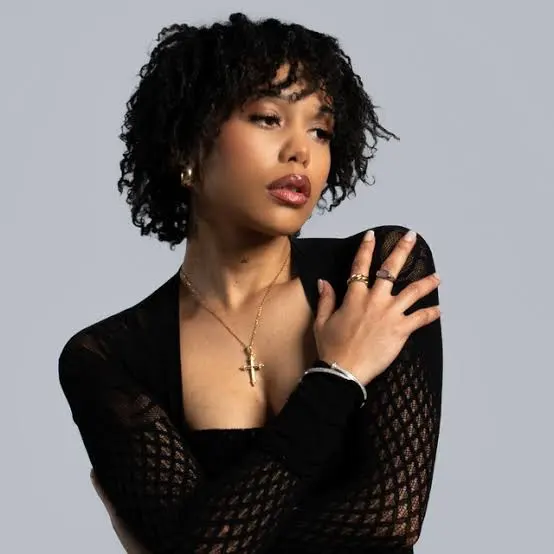
She did not ask anyone's permission to invent a genre term.
Keziah Zoë Meyers, known professionally as lordkez, describes her signature approach to music as Neo Nostalgia, her deliberate method of blending the warmth and familiarity of classic R&B with contemporary African sounds and modern songwriting.
Two words. Completely new. Immediately understood by anyone who has ever felt the specific ache of hearing a 90s R&B record and wishing the music being made today could hold that much warmth.
Built for summer, "4SHO" is rooted in what lordkez describes as Neo Nostalgia, her signature approach to blending the warmth and familiarity of classic R&B with contemporary African sounds and modern songwriting. SA Hip Hop Mag
Neo Nostalgia is not an academic exercise. It is not a marketing concept applied to music that does not actually deliver on the promise. It is a production philosophy that lordkez has been building since her debut, refining across every release, and demonstrating with increasing commercial and critical evidence that it is not just aesthetically satisfying but genuinely commercially powerful.
The evidence arrived before "4SHO" did. It arrived before Kwesta added his voice to hers. It arrived in the form of four months of radio dominance, a Gold certification, a Double Platinum remix, and a SAMA award collected two weeks before this record dropped.
By the time "4SHO" landed on August 21, 2026, lordkez had already proved the concept. The new single is simply the latest demonstration of a thesis that South Africa's music industry has been grading for two years and keeps awarding full marks.
Who lordkez Is and Why This Week Matters
Lordkez is a South African artist establishing a significant presence in the music scene as a purveyor of soulful and boundary-defying compositions. Emerging from the vibrant undercurrent of the South African alt-music scene, lordkez's style transcends genre limits, often flirting with elements of R&B, neo-soul, and experimental music. Amazon Music
That description is accurate and also slightly undersells what the last twelve months have actually produced.
Fresh from winning Best R&B Soul Album at the 2026 South African Music Awards, lordkez returns with a new single, "4SHO," featuring hip-hop heavyweight Kwesta. "4SHO" follows the success of lordkez's single "Aweh," which was the most-played song across South African radio stations between September and December 2025. The track has since been certified Gold, while the "Aweh Remix" featuring Cassper Nyovest has achieved Double Platinum status. SA Hip Hop Mag
Most-played song across an entire country's radio stations for four consecutive months. Gold certification on the original. Double Platinum on the remix. Best R&B Soul Album at the SAMAs. And then, before the award podium has even had time to collect dust, a brand new single with one of South Africa's most celebrated hip-hop voices.
This is not an artist building momentum. This is an artist operating at sustained peak velocity and choosing to accelerate further rather than consolidate what she has already accumulated.
That decision, to release again immediately after a career-defining award cycle, to bring in Kwesta at exactly this moment, tells you something important about how lordkez understands her own trajectory.
What 4SHO Actually Is
The title "4SHO," a stylised take on "for sure," captures the confidence behind the release. There is no sense of hesitation in the collaboration. Instead, the song presents itself as a meeting between two established creative identities willing to explore what happens when their worlds collide. Fakaza
The structure of "4SHO" is doing something that the best 90s R&B and hip-hop collaborations understood instinctively and that contemporary African music is only now recovering as a production philosophy.
In the 1990s, the most memorable records came from an R&B vocalist and a rapper finding a shared emotional space inside a production that was warm enough to hold both of them without either one having to abandon their natural delivery to fit the other. Mary J. Blige and Method Man. TLC and Andre 3000. Faith Evans and the Notorious B.I.G. The groove was the common ground and both artists stood on it from their own side.
Kwesta's contribution to "4Sho" creates an intriguing meeting point between lordkez's atmospheric, genre-fluid sound and Kwesta's grounded rap style. The collaboration feels like a natural exchange between two artists with distinctly different approaches but a shared ability to tell stories with personality and emotion. Fakaza
Kwesta's grounded rap style against lordkez's atmospheric R&B is not a compromise between two sounds. It is a conversation between them. And the fact that it feels natural rather than engineered is the production achievement that Neo Nostalgia as a philosophy makes possible. When the beat carries that classic warmth, when the harmonic language references something both artists grew up hearing, the stylistic distance between an R&B vocalist and a hip-hop emcee becomes navigable rather than insurmountable.
Who Kwesta Is and What He Brings to This
Senzo Mfundo Vilakazi, known professionally as Kwesta, is from Katlehong in Gauteng, one of the townships that shaped the specific sonic identity of South African hip-hop through the 2010s.
Kwesta was deep in his bag when making DaKAR II, the mid-2010s South African hip-hop classic. The double album contains the kasi rap soldier's finest moments, portraying the duality of Black life in South Africa. Outside of elokishini, in the townships, you will never find people who are both poor and happy. That only happens elokishini. That is what he wanted to represent with the album. JustNaija
That is the artist lordkez brought into her world on "4SHO." Not a mainstream crossover pick selected for maximum commercial exposure. An artist whose entire creative identity is built on telling the truth about a specific South African community with personality, wit, and emotional honesty.
The meeting between lordkez's atmospheric introspection and Kwesta's grounded kasi storytelling is not accidental. It is the specific combination that Neo Nostalgia as a production philosophy was always pointing toward. The warmth of the classic era. The realness of the street narrative. The contemporary African production that holds both without either one shrinking to accommodate the other.
Why the 90s Sound Is the Biggest Story in African Music Right Now
The global conversation about the return of 90s R&B has been building for several years and in 2026 it has moved from an industry observation into a mainstream reality that streaming numbers are documenting clearly.
The reasons are worth understanding because they explain why Neo Nostalgia as a term arrived at exactly the right moment.
The 90s represented the last era of popular music before digital production tools made everything simultaneously possible and indistinct. When the palette of sounds available to a producer is effectively infinite, the tendency is toward overcrowding, toward filling every frequency, toward production decisions driven by what is technically possible rather than what is emotionally necessary.
90s R&B production worked from a different constraint set. Warmth was a deliberate choice requiring specific equipment and specific decisions. Space in a mix was a creative choice, not a default. The bass sat where it sat because a human being decided that was where the body should feel it. The chord progression carried emotional weight because it was selected from a more limited range of options, all of which had been refined by decades of soul, gospel, and funk tradition before R&B inherited them.
When contemporary artists reach back toward that warmth, they are not chasing nostalgia for its own sake. They are reaching toward a production philosophy that made decisions based on emotional necessity rather than technical possibility. And African audiences, who have always had a more sophisticated relationship with warmth and space in music than Western production trends typically accommodate, respond to it immediately.
lordkez named this response Neo Nostalgia. And in naming it she gave every African R&B producer and vocalist a term for what they have been building toward without always being able to articulate it.
What This Means for Every African Artist Building in the R&B Space
The lordkez trajectory is worth studying as a practical case study because it demonstrates something that the broader conversation about African music often obscures beneath the excitement of the cross-border collaboration story and the streaming number announcements.
The artists who are winning consistently in 2026 are not the ones who chased the current trend. They are the ones who identified their own specific territory, named it, built on it with consistent intention, and let the audience find them inside it.
With "4SHO," lordkez continues to choose precision over noise, allowing the music to take centre stage. Her latest collaboration with Kwesta could prove to be another defining moment as she continues to establish herself as one of the country's most compelling R&B voices. SA Hip Hop Mag
Precision over noise. That phrase is the practical instruction inside the lordkez story for every African artist reading this.
The music industry in 2026 is extraordinarily noisy. Every platform has more content than any listener can possibly consume. The algorithmic ecosystem rewards consistency, specificity, and quality over volume and trend-chasing. The artist who releases on Neo Nostalgia terms, who knows exactly what emotional territory they are building in and executes within it with increasing precision, is the artist whose catalogue compounds over time rather than competing for attention it cannot sustain.
That precision starts with the beat. The right production foundation for an Afro-R&B record informed by Neo Nostalgia is not a generic R&B instrumental downloaded from a Western marketplace. It is a beat that carries the warmth of the classic era filtered through African production sensibility, built by producers who understand that the warmth is not a surface quality to be approximated but an architectural decision that runs through every element of the track from the bass frequency to the space between the snare hits.
At mBeatz, the Afro-R&B and neo-soul section of the catalogue is built around exactly this understanding. Instrumentals that carry the classic warmth lordkez is building from, filtered through the East African and broader African sonic identity that makes the sound specifically ours rather than a copy of something that was made somewhere else a generation ago.
Every beat comes with instant WAV delivery and a proper licence document. Pay with MPesa, Airtel Money, Visa, Mastercard, Apple Pay, PesaPal, or bank transfer from anywhere in Africa and beyond.
Browse the mBeatz catalogue at mbeatz.org and find the beat that your Neo Nostalgia record deserves.
Which 90s R&B record has influenced your sound the most as an African artist? Drop it in the comments.
.jfif)
.jfif)
0 Comments
Leave a Comment