.jfif)
She almost could not sing it.
The day before Nikita Kering' was set to perform music from her new EP for the first time, her voice disappeared. The show in early June was supposed to mark a return of sorts. It was her first time sharing songs from The Lick Back, her first project since 2022, and a chance to reconnect with fans in real time. But Kering' had been sick with a bad cold, and by the time she woke up after the final rehearsal, her vocal cords were inflamed and she had been placed on vocal rest.
The irony was almost too precise to be accidental.
An EP about finding her voice again. A performance where her literal voice refused to cooperate at the last possible moment.
She performed anyway.
Because that is what The Lick Back is actually about underneath every dancehall groove, every Afrobeats inflection, every ballad that sounds like Nikita Kering' finally exhaling after four years of holding her breath inside a deal that was not built for her.
It is about showing up even when the conditions are wrong. It is about doing the thing you came to do even when your body, the industry, and the circumstances are all conspiring to convince you that tonight is not the night.
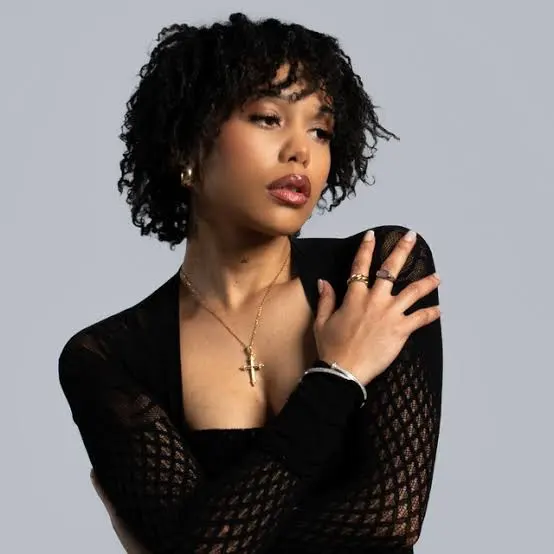
Nikita Kering' enters a sharper, more self-possessed era with The Lick Back, a project about revenge, reclamation, and learning to trust herself again.
Revenge. Reclamation. Trust.
Three words that contain the entire instruction manual for surviving the music industry with your creative identity still intact.
Four Years of Silence and What It Actually Meant
The last time Nikita Kering' released a project before The Lick Back was 2022.
Four years. In an industry that demands constant content, constant visibility, constant algorithmic presence, four years of near-silence is not a pause. It is a statement. Whether she intended it as one or not, the absence communicated something that the return is now being understood against.
The silence was not creative drought. It was not a loss of inspiration or a failure of talent. It was the specific kind of quiet that happens when an artist is inside a structure that is not working for them and has not yet found the exit.
Kering' opened up about leaving her label deal, rebuilding her confidence, and learning to trust herself again.
Rebuilding confidence. That phrase lands differently when you understand what it is referring to. It is not the confidence of an artist who doubts their talent. Nikita Kering' has never had a talent problem. Her voice has been one of the most distinctive in Kenyan music since she arrived on the scene as a teenager, a clarity and emotional precision that made her immediately recognizable and immediately beloved.
The confidence that needed rebuilding was something else. It was the confidence of an artist who had let the machinery of a label structure override her own creative instincts often enough and for long enough that she had started to lose the thread back to what she actually wanted to make.
That is the specific damage that a wrong label deal does to an artist. Not always intentionally. Not always through malice. Sometimes simply through the accumulated weight of decisions made by people who understand commercial music without understanding the particular artist in front of them.
Nikita Kering' lost four years rebuilding the thread. The Lick Back is what she found at the end of it.
What the Title Says Before You Press Play
The Lick Back.
In Kenyan slang and in the broader East African street vernacular, getting your lick back means reclaiming what was taken from you. Returning the energy that was directed at you. Coming back for what belongs to you.
It is not a gentle title. It is not the language of gracious forgiveness or dignified silence. It is the language of an artist who has processed what happened, understood it clearly, made peace with the parts that needed to be made peace with, and then decided that peace does not require pretending nothing happened.
The Lick Back says: I know what I lost. I know how I lost it. And I am back to reclaim everything that silence could not take from me permanently.
That energy is audible the moment the EP begins.
The "Intro," featuring Kenyan Afro House sensation Sofiya Nzau, is especially important to Kering' because it is the first time she sings in her mother tongue on a record. For Kering', that choice is a statement about Kenyan identity, and about finding a way to represent Kenyan-ness that feels authentic to her.
The first song on her comeback project is the first song she has ever recorded in her mother tongue. She chose to begin the new chapter in the language that was always the most deeply hers, the one that existed before any label structure, any commercial consideration, any external definition of what a Kenyan pop artist is supposed to sound like.
That is not a production decision. That is a declaration of ownership.
The Sound She Stopped Chasing
If the business side of The Lick Back is about speaking up, the sound of the EP is about loosening up. Kering' wanted to have fun again. She stopped chasing what she thought people wanted from her and leaned into the genres she actually loves to sing, like dancehall, Afrobeats, R&B, and ballads, her forever signature. With this EP she just did what she likes. If you get it, you get it. If you do not get it, you do not get it, and that is fine.
If you get it, you get it. If you do not get it, that is fine.
That sentence could only be said by an artist who has been on the other side of desperately needing everyone to get it. Who has spent years making music with one eye on the reaction, calibrating every creative decision against an imagined external audience, smoothing out the edges that were most specifically hers in exchange for a palatability that the market might accept more easily.
The Lick Back is what happens when that calibration stops. When an artist decides that specificity is not a commercial liability. That dancehall is on this EP because she loves singing dancehall, not because it tested well in a label meeting. That Afrobeats is here because it is hers to inhabit, not because it is commercially fashionable in 2026. That the ballad at the end of the project exists because the ballad is her forever signature and no industry structure gets to take that away.
The creative freedom of The Lick Back was not given to Nikita Kering'. It was not granted by a supportive new label or enabled by a generous deal structure. It was taken. Reclaimed. Licked back from an industry that had been borrowing it without asking.
The Kenyan Women Building on Their Own Terms in 2026
Nikita Kering' is not building in isolation. The Lick Back arrives inside a broader pattern of Kenyan and East African women who are making the same fundamental decision from different starting points and through different creative approaches.
tg.blk made the Apple Music Africa Rising class of 2026 on the back of a lo-fi, emotionally intimate catalogue built entirely on her own terms, no label structure required to access a global editorial platform.
Njerae built the audience first, signed the Universal deal when the leverage was entirely hers, and became Kenya's most streamed artist with a sound she named Afro-Indie because no existing category was wide enough to hold it.
Karun opened Embe Studio specifically because the studio spaces that existed when she was coming up were not always safe or equipped to support what she needed to make.
Each of these artists made a decision that Nikita Kering' articulates most clearly through a six-word EP title. The decision to stop asking for permission to be exactly what they are.
Still, The Lick Back does not pretend to resolve everything. Kering' does not know exactly where she is going next. But she knows where she is coming from, and she knows that this project exists because she finally trusted herself enough to make it without asking anyone else if it was the right thing to do.
Not knowing exactly where you are going. Knowing clearly where you are coming from. Trusting yourself enough to move anyway.
That is not a description of a comeback. It is a description of what a creative career looks like when it is finally being built by the person it belongs to.
What Nikita Kering' Is Teaching Every Upcoming Kenyan Artist
The lesson inside The Lick Back is uncomfortable because it requires an honest conversation about something that the music industry in Kenya rarely discusses openly.
Label deals are not inherently bad. The right deal, at the right time, with the right structure and the right people, can give an artist access to resources, distribution, and opportunities that accelerate a career significantly. Nyashinski built for twenty years and arrived at Sony from a position of strength precisely because the deal structure worked in his favour.
But the wrong deal, signed too early, with insufficient documentation, without a clear understanding of what is being transferred and what is being retained, can cost an artist four years of silence, a rebuilt confidence, and an EP named after the act of taking back what was taken.
The artists who navigate this correctly are the ones who understand from the very beginning what they own and what they are willing to transfer. That understanding starts earlier than the first label conversation. It starts with the first beat licensed. The first record released. The first decision about whether the music you make is built on documentation solid enough to give you options when the industry comes knocking.
Nikita Kering' had to fight her way back to the music that was always hers. Every upcoming Kenyan artist has the opportunity to build in a way that means that fight never becomes necessary.
At mBeatz, every beat comes with a proper licence document, creating the paper trail that protects creative ownership from the first note. Pay with MPesa, Airtel Money, Visa, Mastercard, Apple Pay, PesaPal, or bank transfer from anywhere in Africa and beyond. Instant WAV delivery. Everything you build on top of it is completely and documentably yours.
Browse the mBeatz catalogue at mbeatz.org and start building something that belongs entirely to you.
Have you ever been in a creative situation where someone else had too much control over your music? Tell us in the comments. This is a conversation Kenyan artists need to have out loud.
.jfif)

0 Comments
Leave a Comment