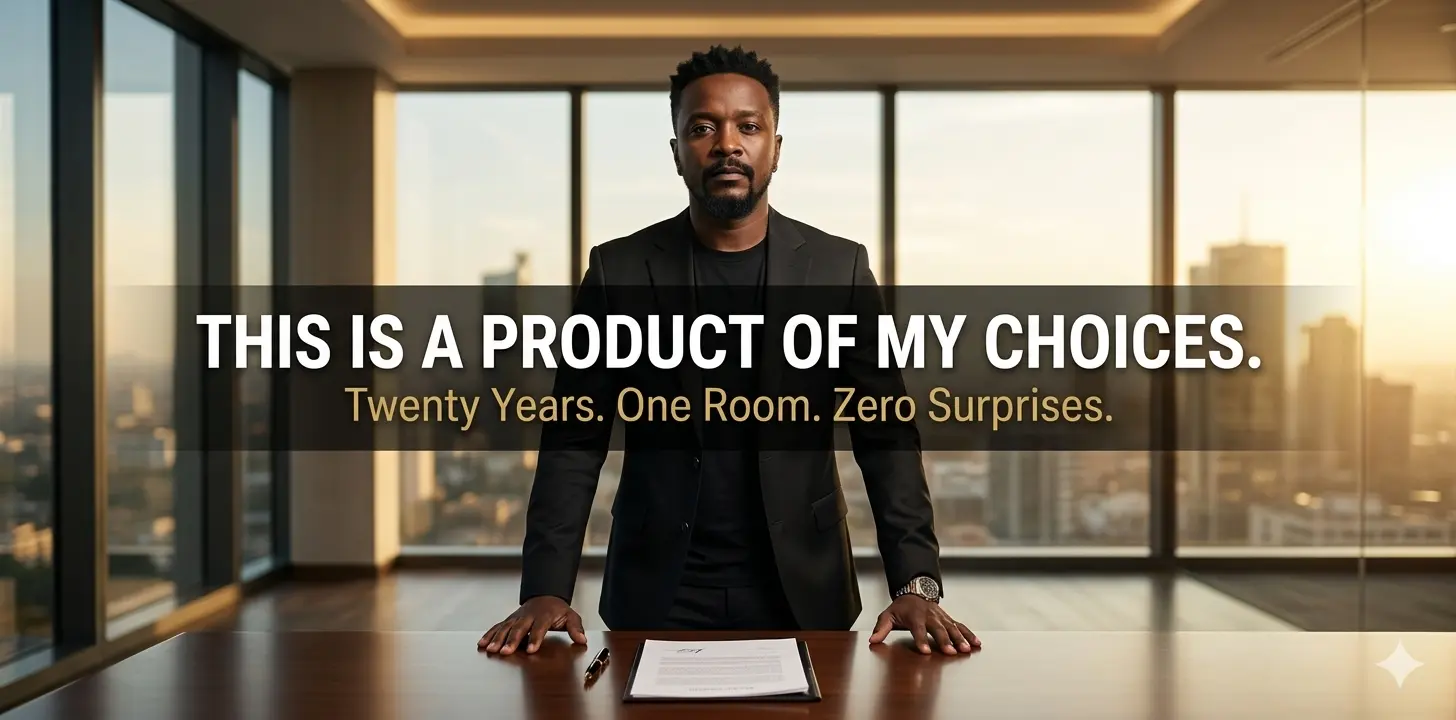
He said it in one sentence and moved on like it was obvious.
"This is a product of my choices and lots of love from many people, that's why we're here." Spotify
That is Nyashinski, standing in Johannesburg, having just signed a recording deal with Sony Music Africa, joining a global roster that includes Tyla, SZA, Future, and Britney Spears.
He did not say Sony believed in him. He did not thank the label for the opportunity. He said: this is a product of my choices.
Twenty years of choices. From a Nairobi estate to Kleptomaniax to a decade in the United States to "Now You Know" to "Malaika" to "Lucky You" to "Yariasu." Every single decision, made with intention, compounding quietly until the world's most powerful music company looked at what had been built and decided they needed to be part of it.
Sony did not discover Nyashinski. Nobody discovers an artist who has been building for two decades. You arrive at an artist like that. You find them already there, already standing on something solid, and you ask if there is room for you in what they are making.
That distinction matters more than any deal announcement ever will.
Where It Actually Started
Nyashinski's journey dates back to the early 2000s as part of the celebrated Kenyan rap trio Kleptomaniax. The group disbanded in 2009 after carving one of the most significant chapters in Kenyan hip-hop history. Spotify
That disbanding could have been the end of the story. Most group breakups in Kenyan music end exactly that way. The individual members drift. The audience moves on. The moment passes without anyone adding a second chapter.
Instead, Nyashinski spent years in the United States, a long hiatus from the music scene that seemed to sharpen his creative edge rather than dull it. Spotify
That detail sits quietly in most profiles of the man and deserves a louder reading.
He did not spend his years abroad chasing shortcuts back into the industry. He did not release music just to maintain a presence. He went away, developed, and came back when he had something worth bringing back to.
He released "Now You Know" in 2016 and "Malaika" in 2017, earning a Mdundo award for Most Downloaded Male Single that year. Spotify
Seven years of silence followed by two records that reminded Kenya exactly who he was. The audience had not forgotten him. He had just been making them wait until he was ready.
The Album That Changed Everything
Yariasu follows the critically acclaimed debut Lucky You from 2020 and a trio of EPs that showcased Nyashinski's creative range and cemented his position as one of Africa's most versatile artists. GRAMMY
But the detail inside the Yariasu release that nobody has talked about loudly enough is not the Sony deal. It is the decision he made about features.
Yariasu is a no-features album, an approach Nyashinski first embraced with his debut Lucky You, allowing his voice, storytelling, and vision to stand entirely on their own. GRAMMY
Two consecutive albums. No features. Not one.
In an era where features are the primary currency of East African music, where the algorithm rewards collaborative reach and artists stack guest appearances to access each other's audiences, Nyashinski made two solo statements back to back and dared the industry to evaluate him on the quality of what he alone could make.
On the album's opener "Legendary," he raps: "I will be legendary. You will remember me." The track captures his hunger to inspire, uplift, and solidify his legacy, not just in East Africa but globally. GRAMMY
He was not asking. He was declaring.
And Sony, whose roster spans the most commercially successful artists on the planet, heard the declaration and decided to add their infrastructure to it.
What Sony Actually Signed
Christine Seven Mosha, Head of Sony Music Eastern Africa, was direct about what drew the label to this specific artist. "Nyashinski's signing is a milestone for us and a testament to the incredible talent emerging from East Africa. He embodies the spirit of innovation and authenticity that our label strives to promote." The NATIVE
Sean Watson, Managing Director of Sony Music Africa, added: "Nyashinski represents everything the world needs to see from East Africa. Authenticity, versatility, longevity, and artistic excellence. This partnership is about more than music. It is about elevating the culture and giving East African voices the global platform they deserve." The NATIVE
Read those statements carefully and you will notice something. Not one word about potential. Not one word about what they hope to build together or what they believe he might achieve.
They are describing a body of work that already exists. Authenticity. Versatility. Longevity. Artistic excellence. These are not promises about the future. These are observations about a twenty-year record.
Sony signed the resume. The resume was built one careful decision at a time, starting long before anyone at a major label was paying attention.
The Question Underneath the Story
There is a conversation in East African music about whether global record deals are an opportunity or a trap. The Nyashinski deal has brought that conversation into sharp relief, with strong opinions on both sides about what the partnership with Sony means for his creative direction. eiiGhana Africa
That is a legitimate conversation and it deserves space. The history of African artists signing global deals and losing creative control, losing masters, losing the very authenticity that made them worth signing in the first place, is long and documented.
But the Nyashinski version of that conversation starts from a different place than most.
Nyashinski achieved legendary status before the Sony deal, having reunited with Kleptomaniax members Collo and Roba on stage at one of the most hyped concerts of 2025, while simultaneously releasing Yariasu and launching Showman, his 2026 residency. Artist Heat
An artist who signs from a position of strength, with a loyal audience already built, a catalogue already established, and a no-features artistic philosophy already proven across two albums, is not the same as an artist who signs because they need the infrastructure to build what they cannot yet build alone.
Nyashinski did not need Sony to be heard in Kenya. He already was.
He needed Sony to make sure the world heard what Kenya already knew.
That is what twenty years of choices buys you. Not a deal. Leverage.
What This Means if You Are Just Starting
Three stories have run through this blog in recent months. Mejja betting on himself after nineteen years. Bensoul walking away from the biggest label in Kenya to own what he made. Nyashinski building so much quality over so long that the world's most powerful music company came looking.
Three completely different paths. Three completely different timelines. One identical foundation underneath all of them.
Every record that built the leverage Nyashinski brought to that room in Johannesburg started with a beat, a clean recording, and a proper licence. Every stream that built his Boomplay and Spotify numbers toward the top of Kenya's most-streamed charts was a stream on a record he owned. Every collaboration on Coke Studio Africa and every appearance on stages across the continent happened because the catalogue underneath him was solid enough to hold the weight of those moments.
The foundation is always the same. The first record. The first beat. The first decision about whether the music you make is going to be owned properly or not.
"This partnership with Sony Music is more than just a deal," Nyashinski said. "It is a recognition of East Africa's rich musical talent and a platform to showcase our stories to the world." Substack
The stories have to exist before anyone can showcase them.
Build yours.
Which East African artist's journey has shaped how you think about your own music career? Drop them in the comments.
.jfif)
0 Comments
Leave a Comment